← Work/SailFishBose May

SailFish · DeFi exchange on EDU Chain

When a new blockchain had users but nowhere to trade

SailFish is the first native veDEX on Open Campus EDU Chain. I designed the product end to end (swap, liquidity pools, voting, bribes, bridging and campaigns) so a new ecosystem could bootstrap liquidity without asking users to master DeFi first.

$8Min transactions in the first 4 months
$157M+cumulative trading volume to date
59kusers across testnet and mainnet
$95kbridged in the first 7 days
My role
Product Design Lead
Strategy and research
Testing and launch
Deliverables
Product structure and system map
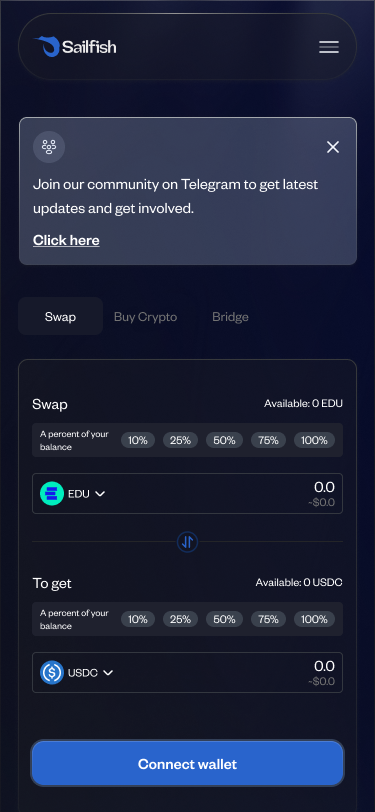
High-fidelity web app and responsive mobile
Landing page, campaigns and launch assets
Duration
3 months to testnet MVP (Sept–Oct 2024), then ongoing through mainnet

Context

The problem wasn't the code. It was an empty market.

EDU Chain is a Layer 3 blockchain built on Arbitrum Orbit by Open Campus, designed for education apps and what its community calls EduFi. Its testnet was busy: about 86 million transactions and 358,000 active wallets across 47 apps. But a new chain without a place to trade is a city without a market. Tokens had nowhere to swap, new projects had no way to attract liquidity, and liquidity providers had no reason to bring their capital.

SailFish set out to be that market. It's a veDEX (vote-escrowed decentralised exchange): people who lock the SAIL token as veSAIL vote on which pools receive SAIL rewards, and in return earn 100% of those pools' trading fees. Projects can add "bribes", extra rewards, to attract votes to their pool.

How do you design a veDEX for an ecosystem with no existing liquidity, and users who've never used one?

On Ethereum or Base, a veDEX can assume its users already understand locks, gauges and emissions. On EDU Chain, many users were students and educators trying DeFi for the first time. The design had to make a powerful model feel simple, show rewards clearly enough that LPs would commit capital, and feel safe on a chain nobody had traded on before.
Discovery

Understanding the problem before defining the solution

Discovery ran in three streams: a competitive analysis of established veDEXs, interviews with liquidity providers, traders and protocol founders, and a look at how early EDU Chain users behaved on testnet.

Desk research

A busy chain with nowhere to trade

EDU Chain's testnet showed real demand, with tens of millions of transactions and hundreds of thousands of wallets, but almost no DeFi infrastructure. Most activity was learning apps and quests. When mainnet launched in January 2025 with over $150 million in total value locked, much of that capital needed somewhere to go.

Getting assets onto the chain was its own hurdle. EDU tokens lived mainly on BNB Chain and had to travel through Arbitrum to reach EDU Chain: two bridges, three networks and plenty of room for mistakes.

veSAILSAIL locked for voting power. More voting power means a bigger share of fees.
EmissionsNew SAIL paid to liquidity providers in the pools voters choose.
BribesExtra rewards a project offers voters to direct emissions to its pool.
Concentrated liquidityLPs choose a price range so their capital earns more fees while the price stays in range.

These four ideas sit at the heart of every veDEX. The design had to make each of them readable without a glossary.

Competitive analysis

What the established veDEXs got right, and where they lost people

PlatformStrengthsWeaknessesOpportunity for SailFish
Velodrome (Optimism)Effective bribe mechanicsLittle transparency in how rewards are calculatedShow estimated earnings before anyone commits
Aerodrome (Base)High governance engagementConfusing LP and staking flowsStreamline add, stake and manage into one path
Thruster and other Blast DEXsStrong token incentivesOverly complex, dense UISimplify staking and reward visualisation
Uniswap v3Mature concentrated-liquidity toolsPrice ranges intimidate new LPsPreset ranges and plain-language warnings

The pattern was clear. veDEXs win on incentives and lose people on comprehension. SailFish needed to be simpler, cleaner and more educational than its peers while still offering the advanced tools experienced users expect.

User research

Interviews with LPs, traders and protocol founders

I sat down with liquidity providers, traders and protocol founders, the three groups SailFish had to serve. Each walked me through the last time they added liquidity, made a trade or tried to attract liquidity to a token.

  1. Walk me through the last pool you added liquidity to. How did you choose it?
  2. How did you know what you'd earn, and did it match what you got?
  3. What's the most confusing step on the DEXs you use today?
  4. What would make you trust a DEX on a brand-new chain?
  5. For founders: how do you attract liquidity to your token today?

Key insights

  • Earnings before commitment. LPs wouldn't deposit without seeing APR, fees and their share up front.
  • Every step needs a "why". Locking, voting and bribing were understood only when the screen explained what each action did for them.
  • Speed and price are the whole job for traders. Slippage and slow quotes sent them straight to another DEX.
  • Founders wanted a lever. They needed a transparent way to pay for liquidity, not a governance forum.
  • Getting onto the chain was the first drop-off. Many users gave up before their first trade because bridging took three networks.

Business goals

What the protocol needed

  • Bootstrap liquidity fast. Deep pools mean low slippage, which brings traders, which brings fees.
  • Grow veSAIL lockers. Long-term lockers stabilise the token and direct emissions.
  • Become the ecosystem's launch venue. New EDU Chain projects should list, bribe and launch on SailFish first.
  • Ship an MVP on testnet within a hackathon semester. Scope had to fit the Open Campus semester calendar.

Synthesis

From findings to a system map

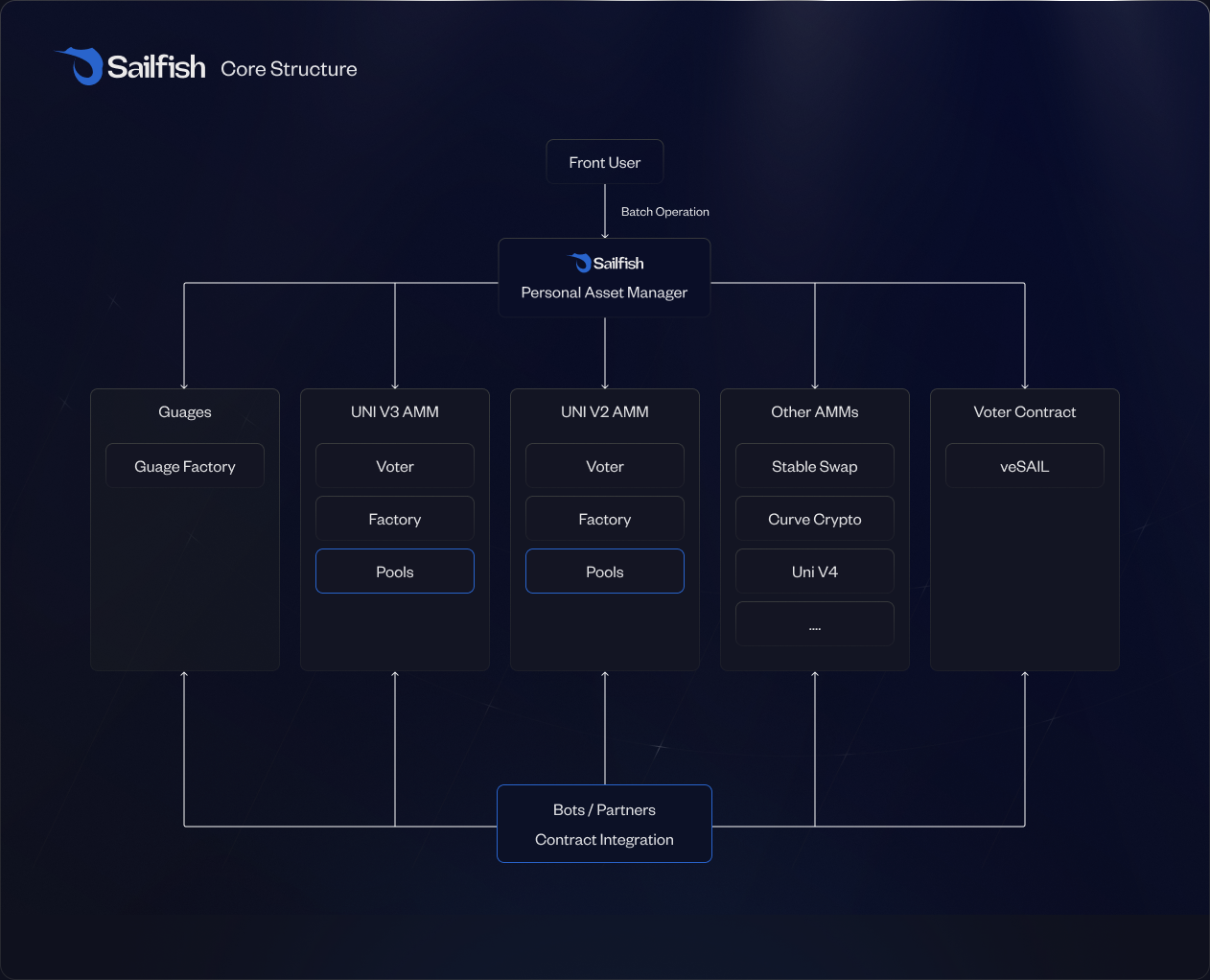
I mapped how SailFish's parts connect: a personal asset manager at the centre, V2 and V3 AMMs, a voter contract, gauges, veSAIL, and integrations with partner protocols. Every screen had to explain one part of this system without making the user learn all of it.

  • Show the money first. APR, fees and estimated rewards on every pool, vote and lock.
  • Teach in the margin. Every action screen carries a numbered "how it works" panel beside the form.
  • One path per job. Swap, add liquidity, vote and bribe each follow a short, predictable sequence.
  • Make getting on-chain part of the product. Bridge and buy live next to swap, not on another site.
Sources for desk research

Target audience

Three users, one exchange

A veDEX only works when three groups show up together: LPs bring liquidity, traders bring fees, and protocols bring incentives. Three personas kept each of them in view.

David · Liquidity provider

Crypto investor in Lagos, in DeFi since 2021

Chases yield but is sceptical of new chains. Needs to see exactly what he'll earn before committing capital.

Pain points

  • Staking mechanics are hard to follow
  • No clear view of potential earnings
  • Wants low-maintenance passive income

Aisha · Trader

Full-time crypto and NFT trader in Dubai

Moves between DEXs and chains looking for low slippage and fast execution. Leaves the moment a platform feels slow.

Pain points

  • Slippage eats her margins
  • Needs fast, reliable execution
  • Wants a clutter-free interface

James · Protocol founder

Runs a DeFi lending protocol in Berlin

His protocol needs deep liquidity. Sees veDEXs as the answer but finds governance and bribes confusing.

Pain points

  • Struggles to attract LPs to his token
  • Governance feels opaque
  • Wants a transparent way to offer bribes

The design

From bridge to first vote

The MVP had to change mid-project when smart contract constraints forced us to deprioritise some designs and re-scope. What shipped follows a user from getting onto EDU Chain, to their first swap, their first pool, and their first vote.

Bridge

Getting on-chain is step one of the product

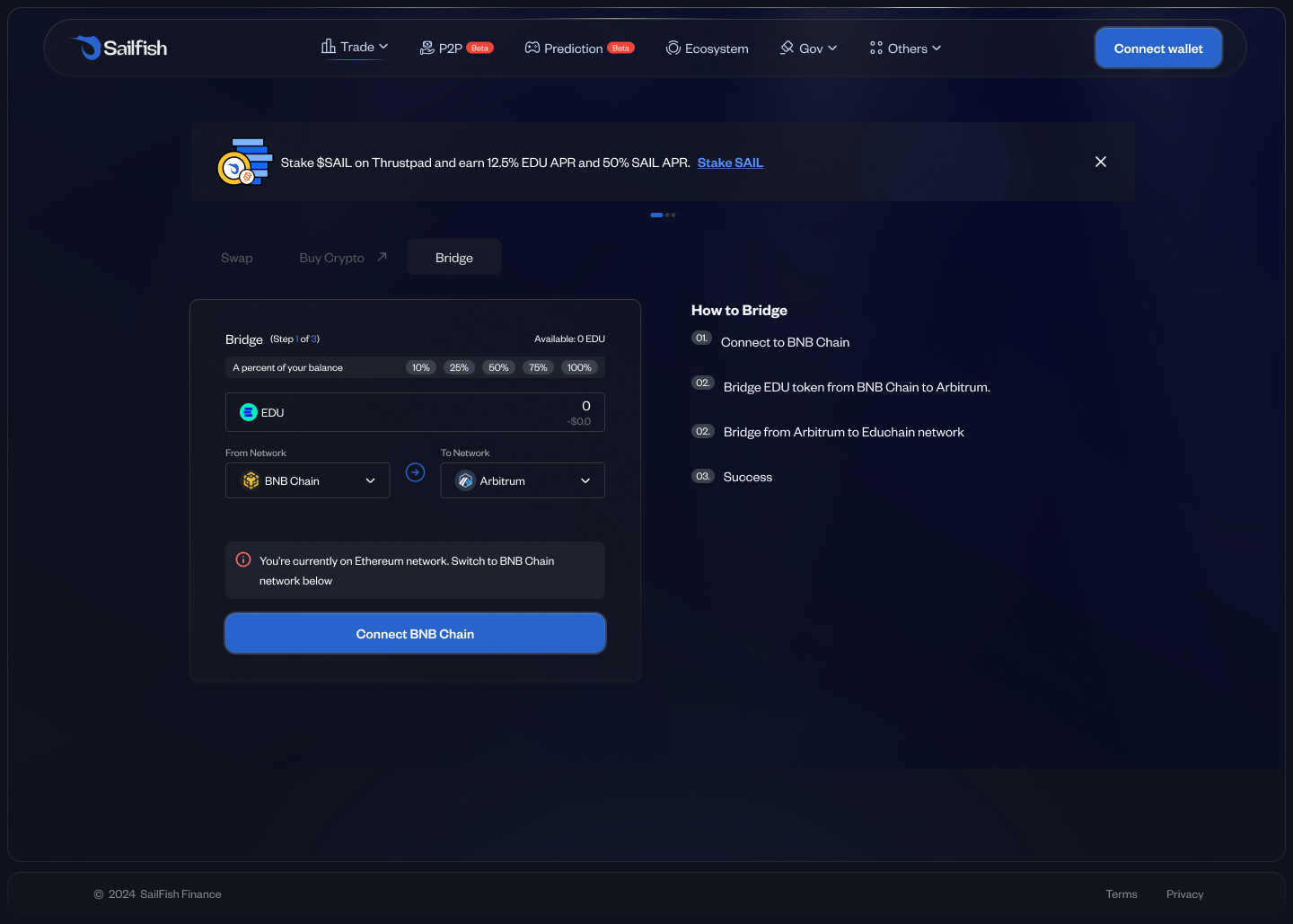
Bridging EDU used to mean leaving for other sites and hopping from BNB Chain to Arbitrum to EDU Chain. SailFish's bridge sits in the same panel as Swap and Buy Crypto, labels each hop "Step 1 of 3", and warns when the connected wallet is on the wrong network before anything can go wrong. $95k was bridged in its first week.

Swap

Fast for traders, guided for first-timers

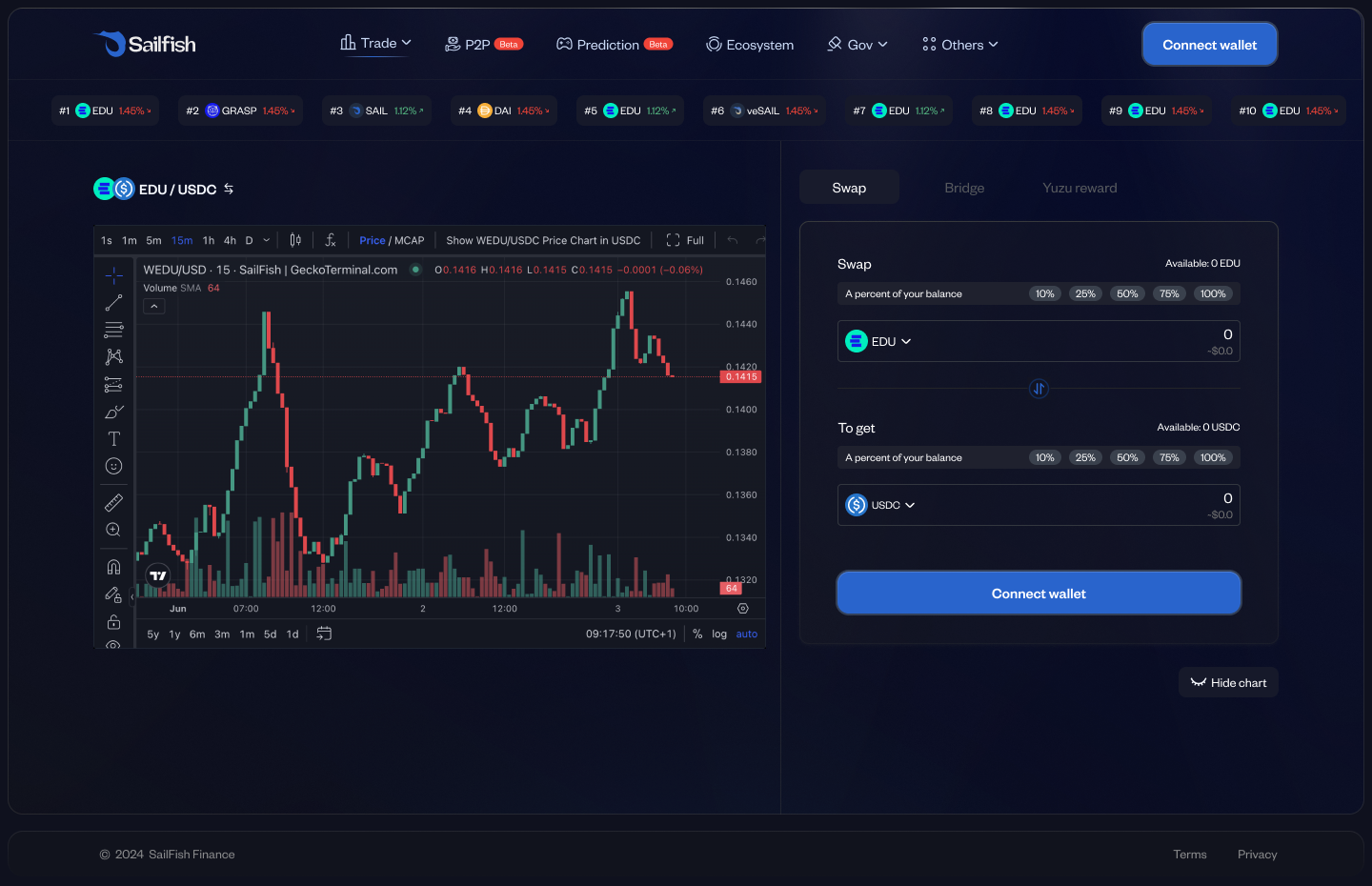
The swap panel keeps the essentials together: balance shortcuts (10% to 100%), the "To get" estimate and one button. A smart split router finds the best route across pools to reduce price impact. Experienced traders get a full chart and a token ticker across the top; first-timers get numbered steps explaining what happens at each stage.

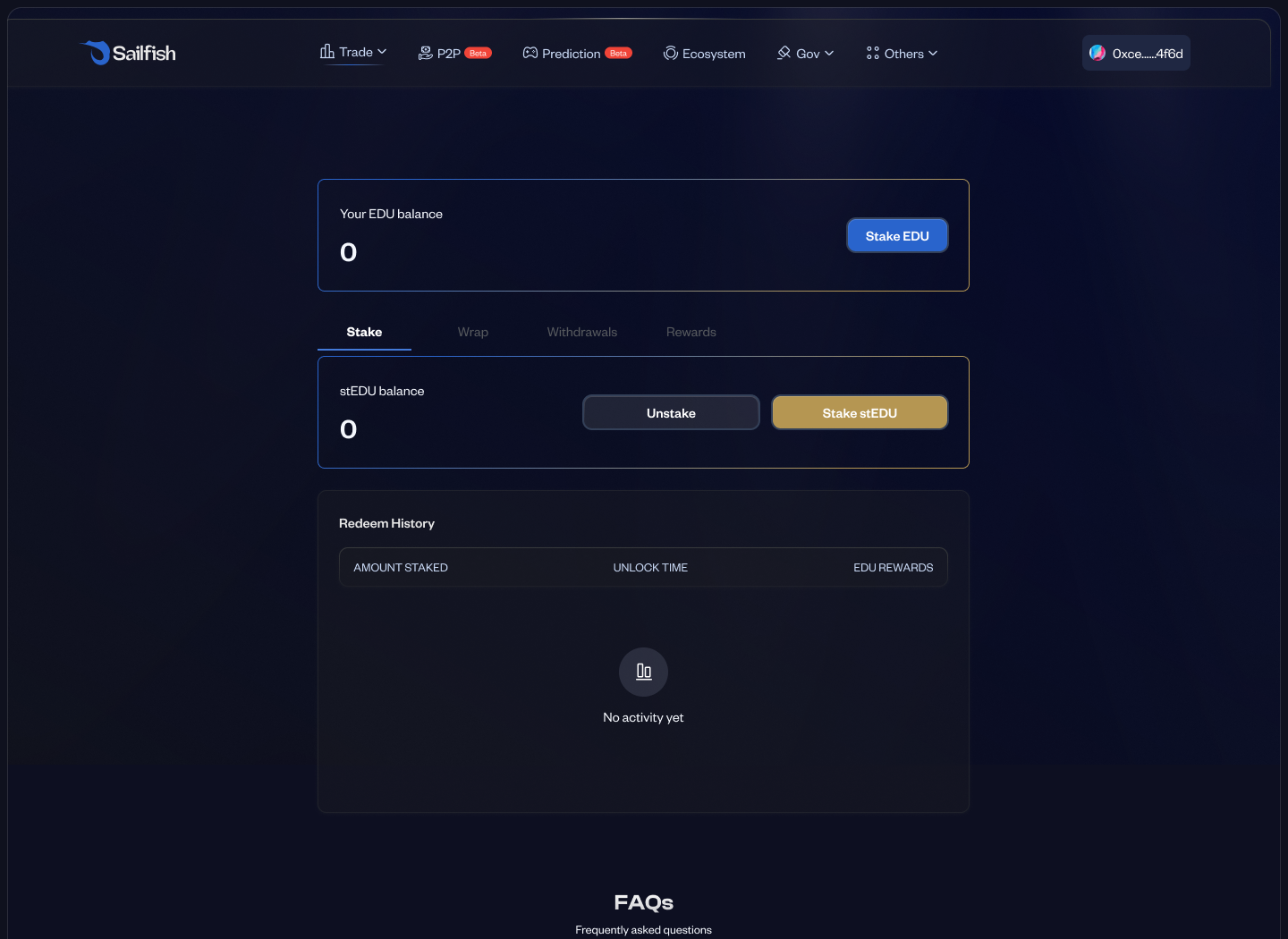
Staking EDU to mint stEDU later joined the same family of simple, single-form actions.

Liquidity pools

Every pool shows what it pays

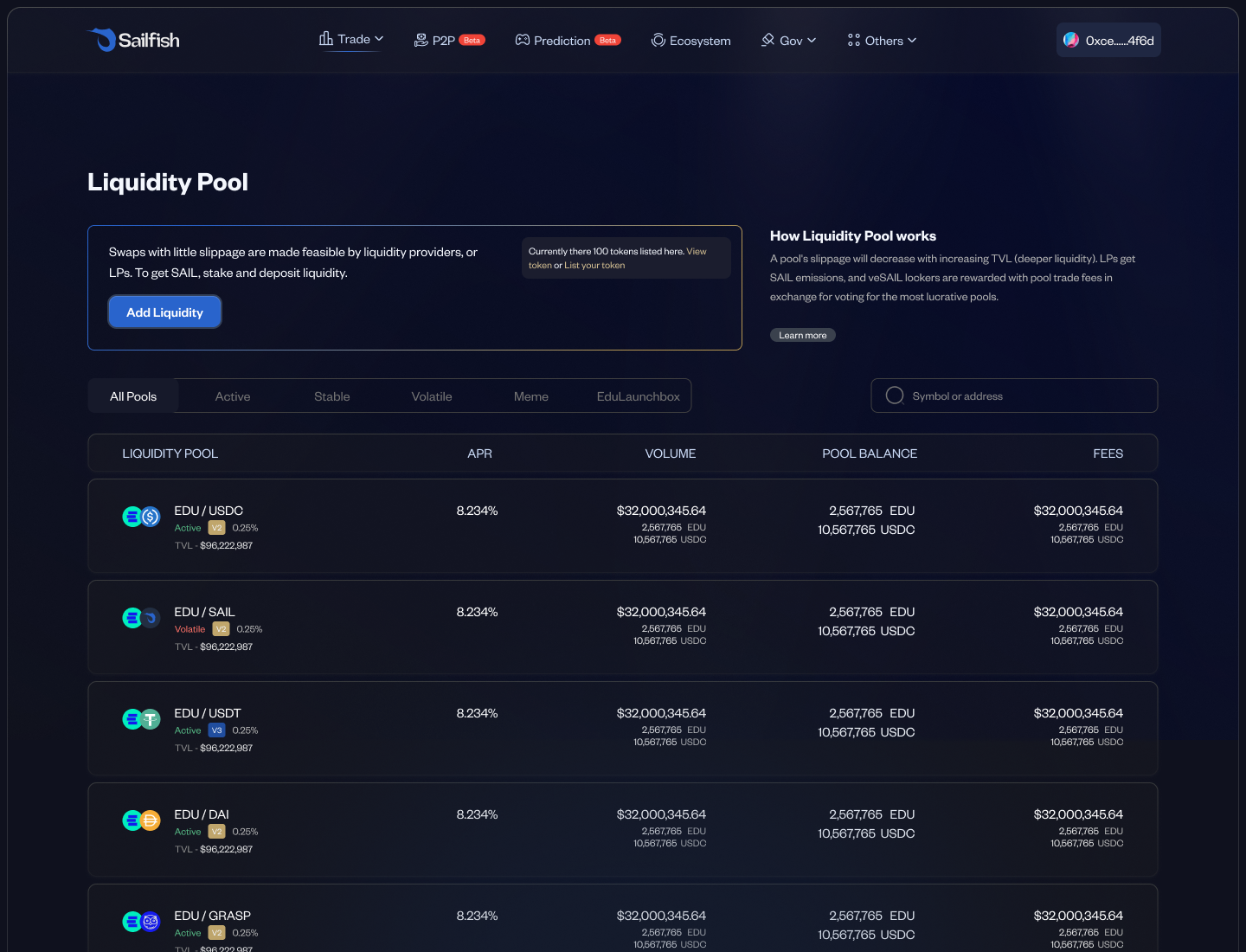
The pools list leads with what LPs care about: APR, volume, pool balance and fees, with filters for Stable, Volatile, Meme and EduLaunchbox pools. A "How liquidity pools work" panel sits above the table in plain language: deeper pools mean less slippage, LPs earn SAIL, and veSAIL voters earn the fees.

Pool wizard

Concentrated liquidity without the fear

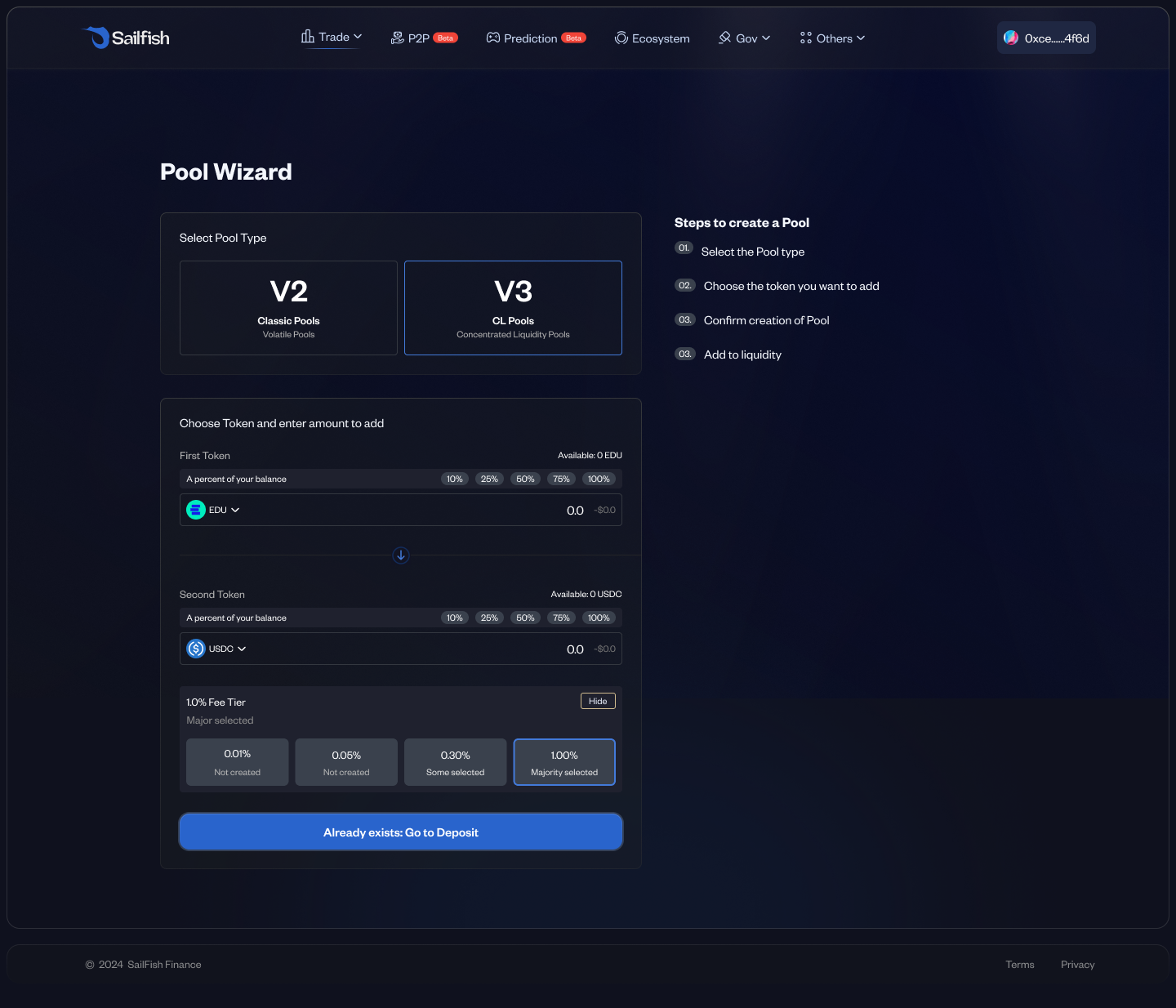
Creating a pool starts with one choice: V2 classic pools or V3 concentrated-liquidity pools. Fee tiers are labelled by how often they're chosen, and price ranges come with presets (0.1%, 0.5%, 1% or full range), so new LPs don't have to calculate a range from scratch. A warning appears if a position won't earn until the price moves into range.

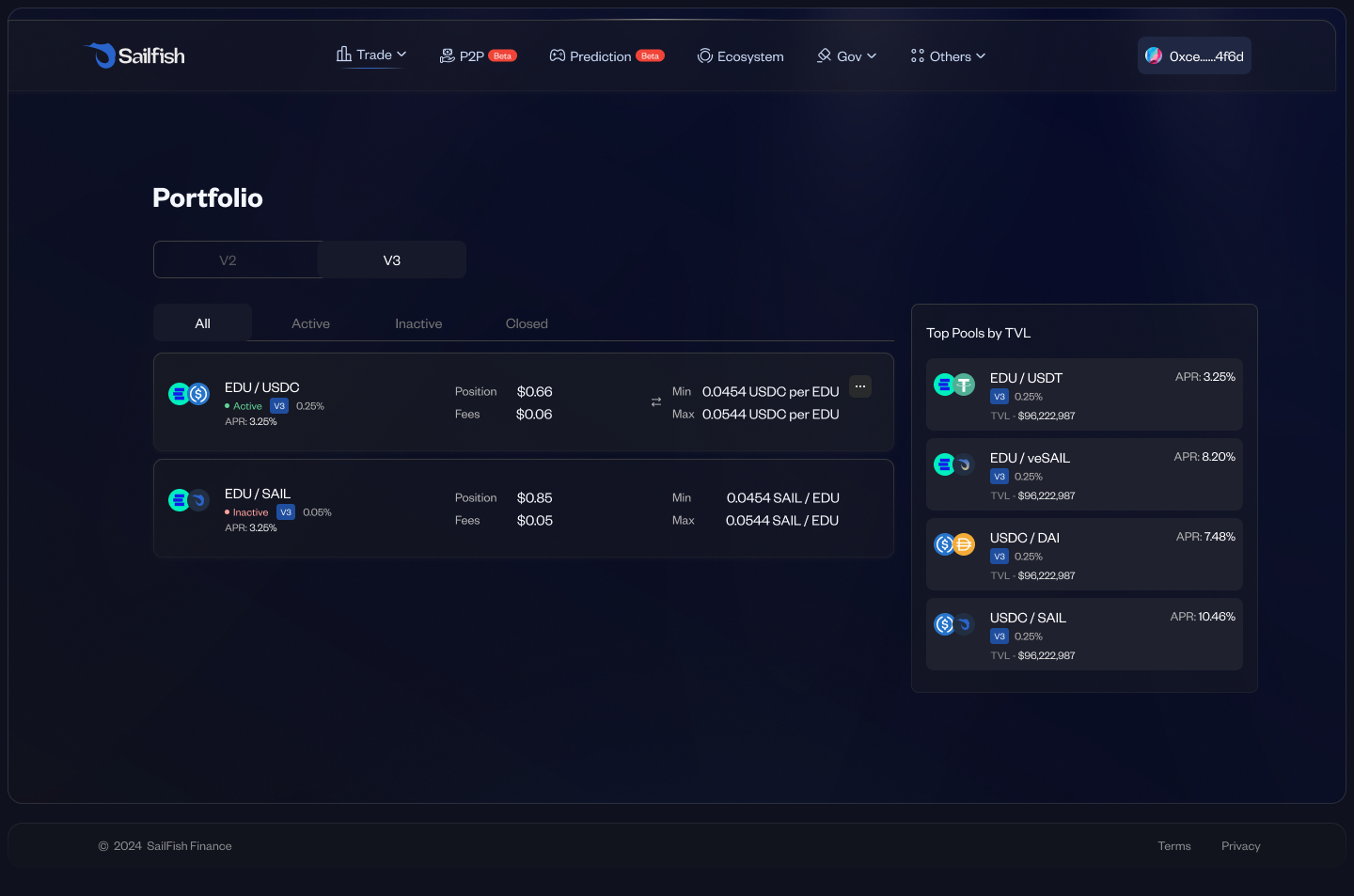
The Portfolio then gathers every V2 and V3 position with its range and fees, alongside the top pools by TVL.

veSAIL and voting

Governance you can read like a price list

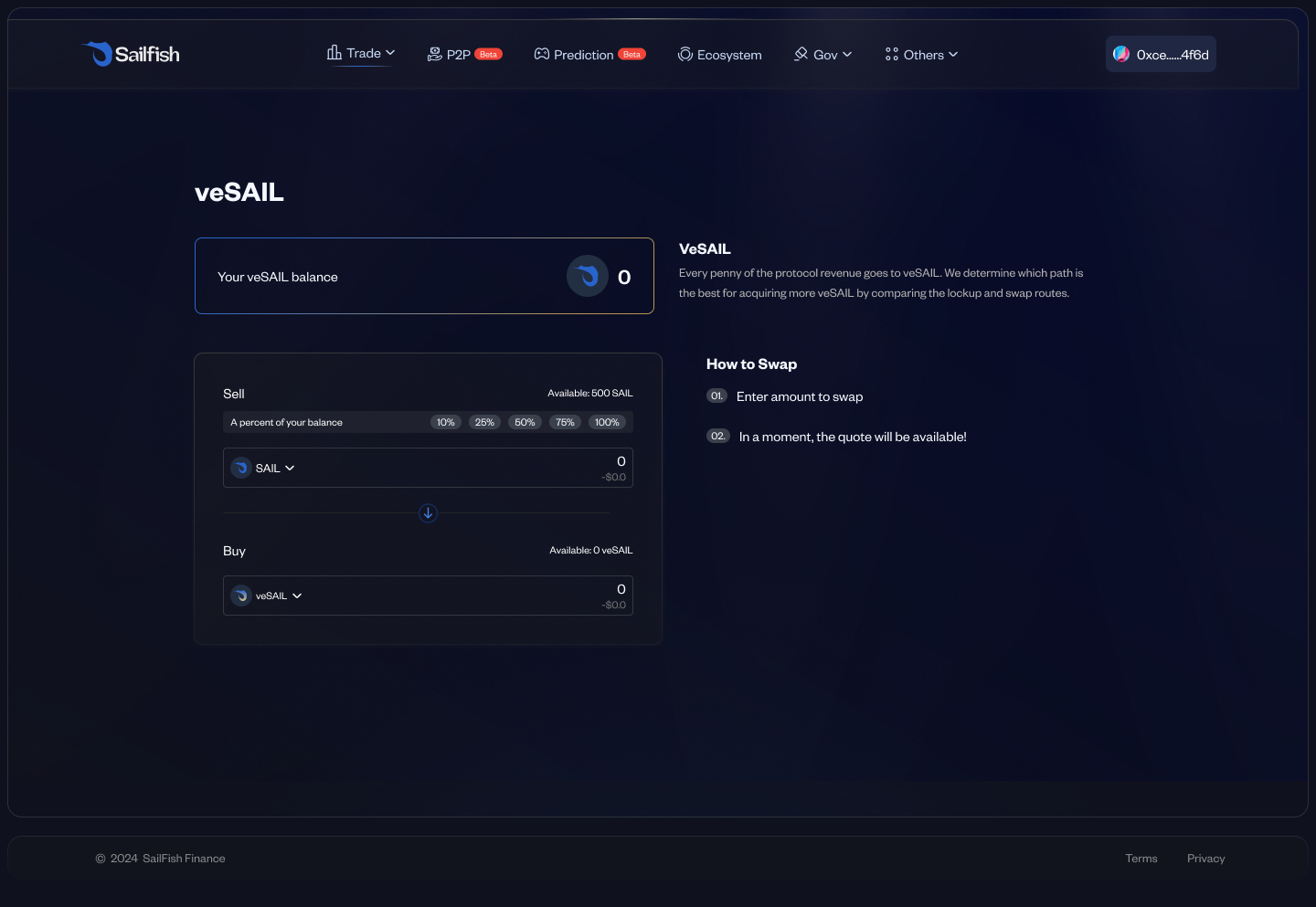
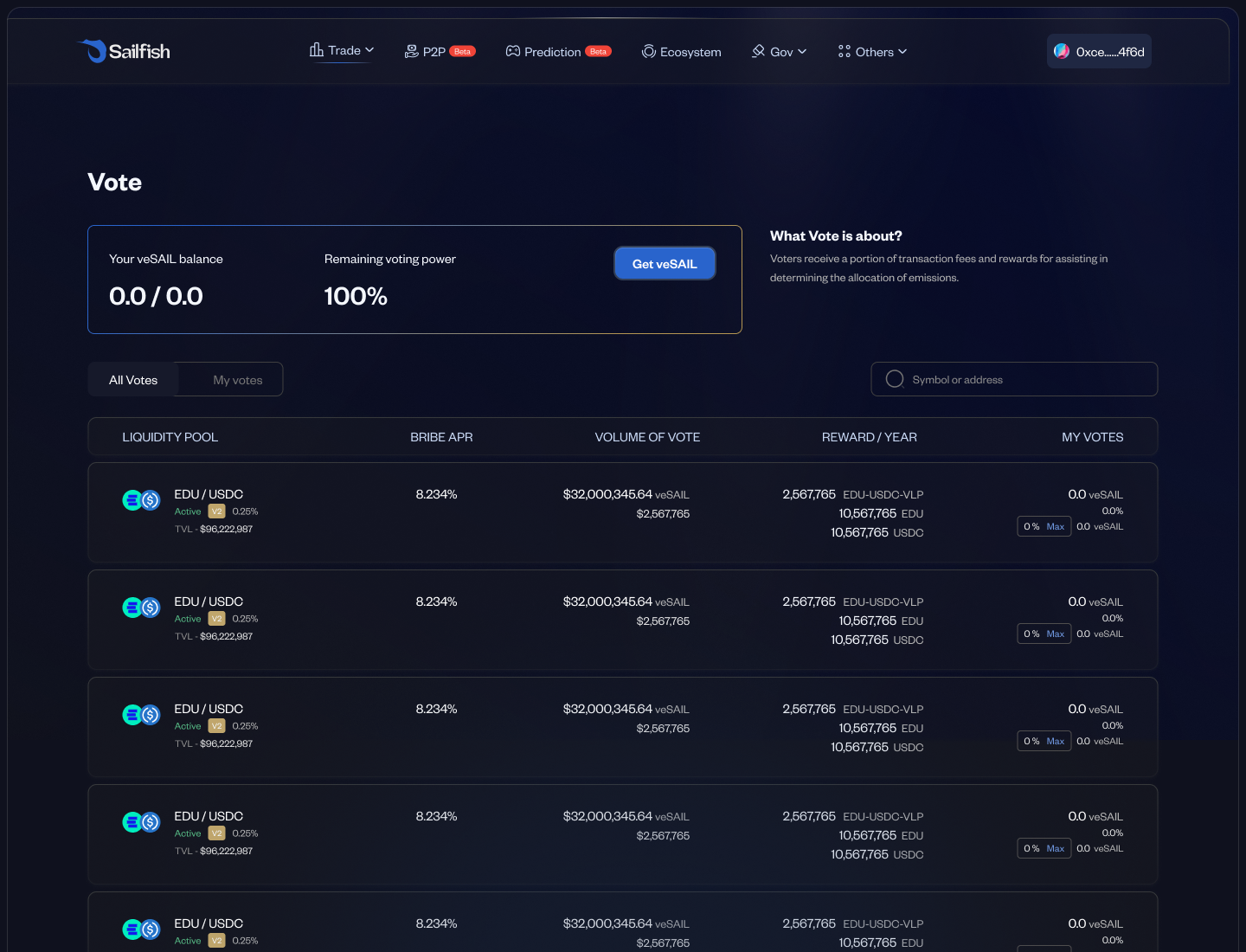
Locking SAIL for veSAIL is a single swap-style form, with an explanation of why locking pays. The Vote page shows your veSAIL balance and remaining voting power at the top, then every pool with its bribe APR, volume of votes and estimated reward per year. You choose where to vote by comparing rewards, not by reading a governance proposal.

Bribes

A transparent lever for founders

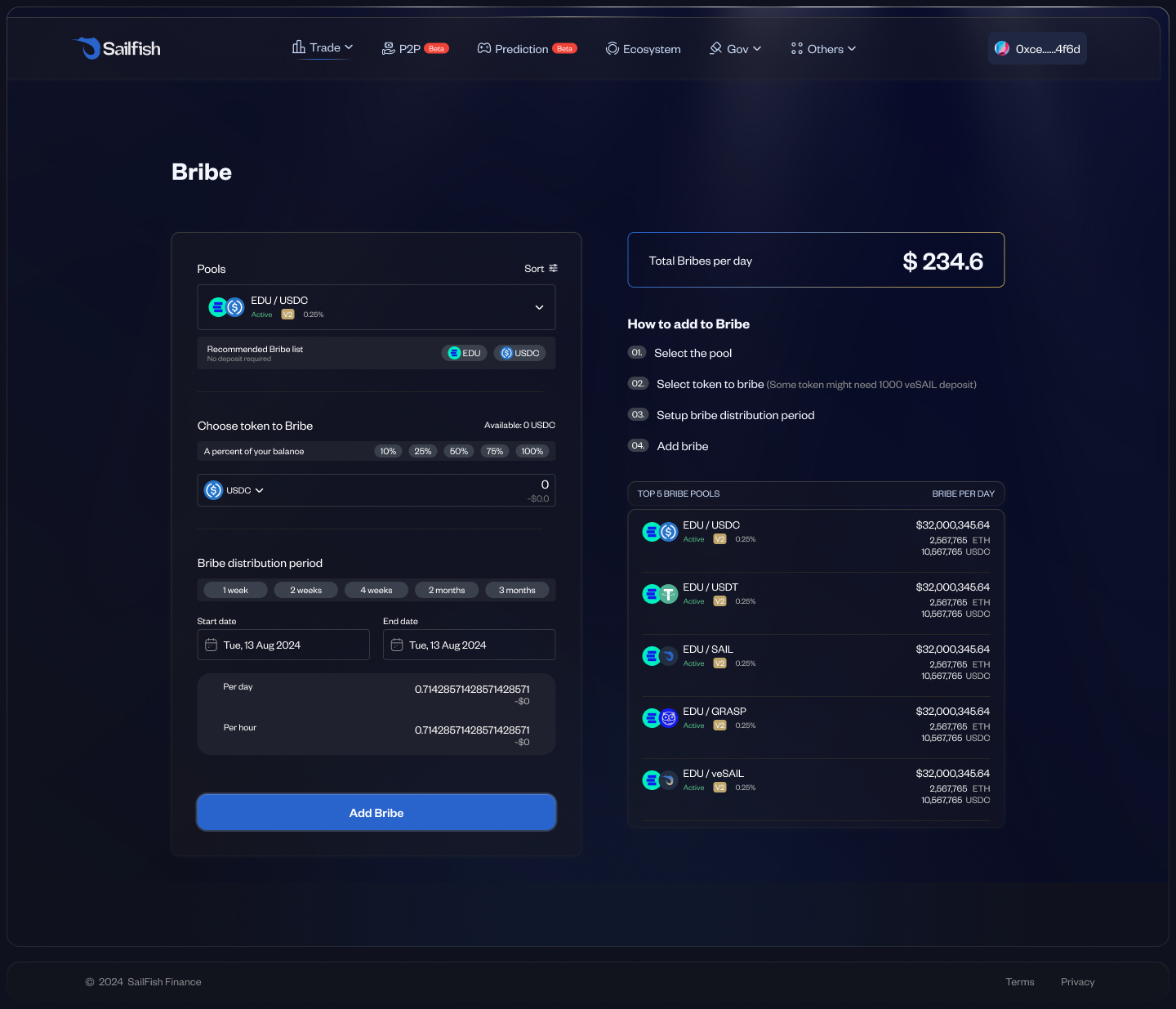
For founders like James, adding a bribe is a short form: pick the pool, choose the reward token and amount, set the distribution period, and see the reward per day and per hour before confirming. Top bribed pools and the total bribes per day sit beside the form, so founders can see what it takes to compete.

Campaigns

Growth built into the product

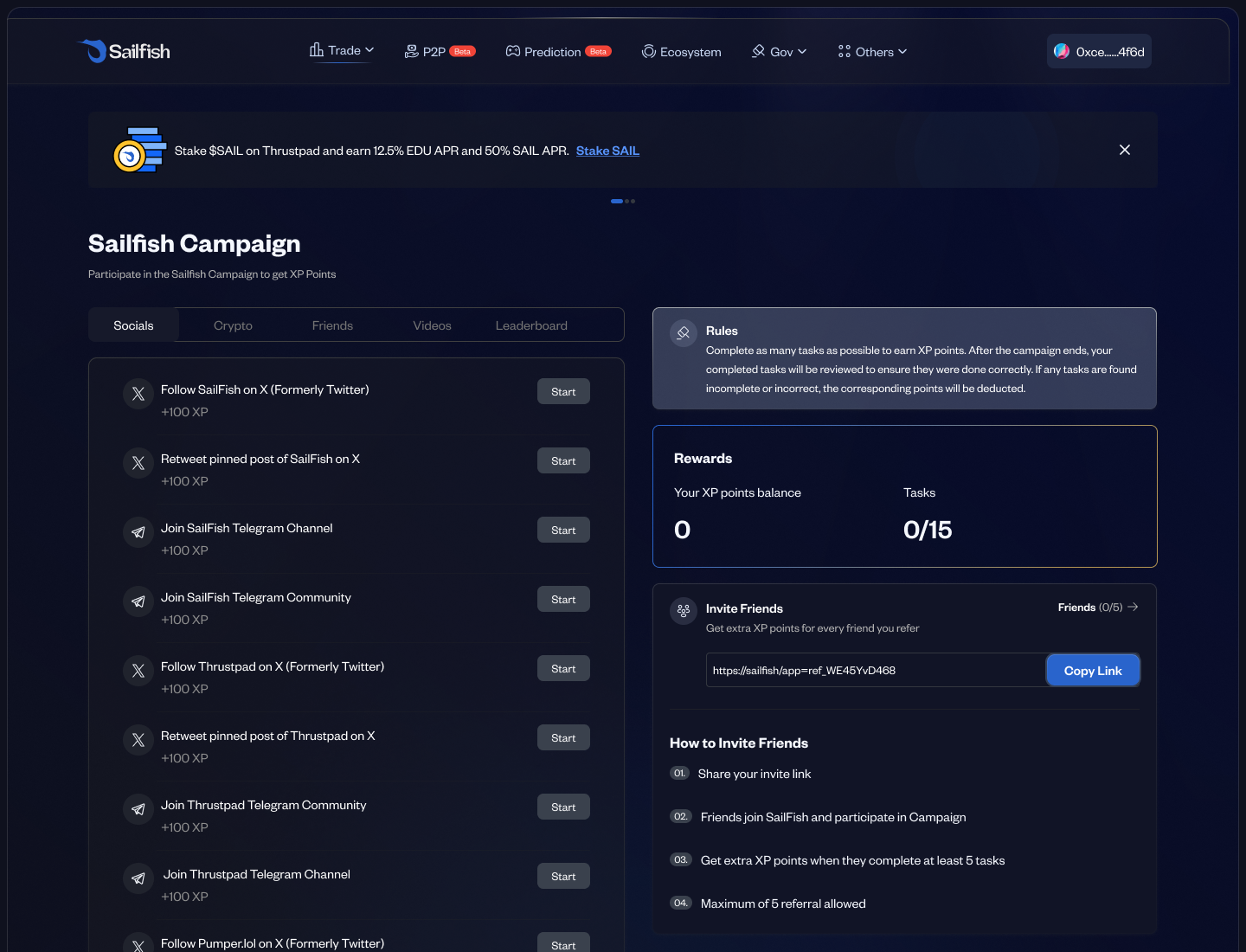
To bring in the first users, campaigns award XP for social, crypto and on-chain tasks, with referral links and a leaderboard. Trading and liquidity competitions paid out in SAIL and Yuzu Points, EDU Chain's ecosystem-wide reward, which tied SailFish into incentives users already cared about.

Outcome and reflection

What launching the first veDEX on a new chain looked like

SailFish went from a hackathon MVP on testnet to EDU Chain's first live veDEX on mainnet. It won the EDU Chain Open Semester Hackathon and partnered with ecosystem projects such as OpenTask AI and GRASP Academy.

$8Min transactions in the first 4 months
$157M+cumulative trading volume
59kusers, mostly from Europe and the US
1.2Mtransactions on EDU Chain testnet

Looking back, the most valuable design work wasn't any single screen. It was the "how it works" panels and estimated rewards that made a complex model readable for people trying DeFi for the first time. The hardest moment was re-scoping mid-project when smart contract constraints changed, and designing in close step with engineering from day one would have saved us redoing finished designs.

The next opportunity is retention. Liquidity follows incentives, and when emissions slow, LPs leave. Clearer long-term views of earnings, alerts when a position goes out of range, and simpler ways to compound rewards would help keep liquidity after the campaign rewards end.