← Work/Prepme AcademyBose May

Prepme Academy · Edtech, gamified

Turning past questions into a game students want to win

Prepme Academy helps Nigerian students prepare for WAEC, JAMB, NECO and other exams by practising real past papers. I designed it to feel like a game: streaks, quests, a weekly leaderboard, and XP that students convert into airtime and data.

+30 XP per exam+500 XP per friend1 day streak₦20,000 weekly prize pool
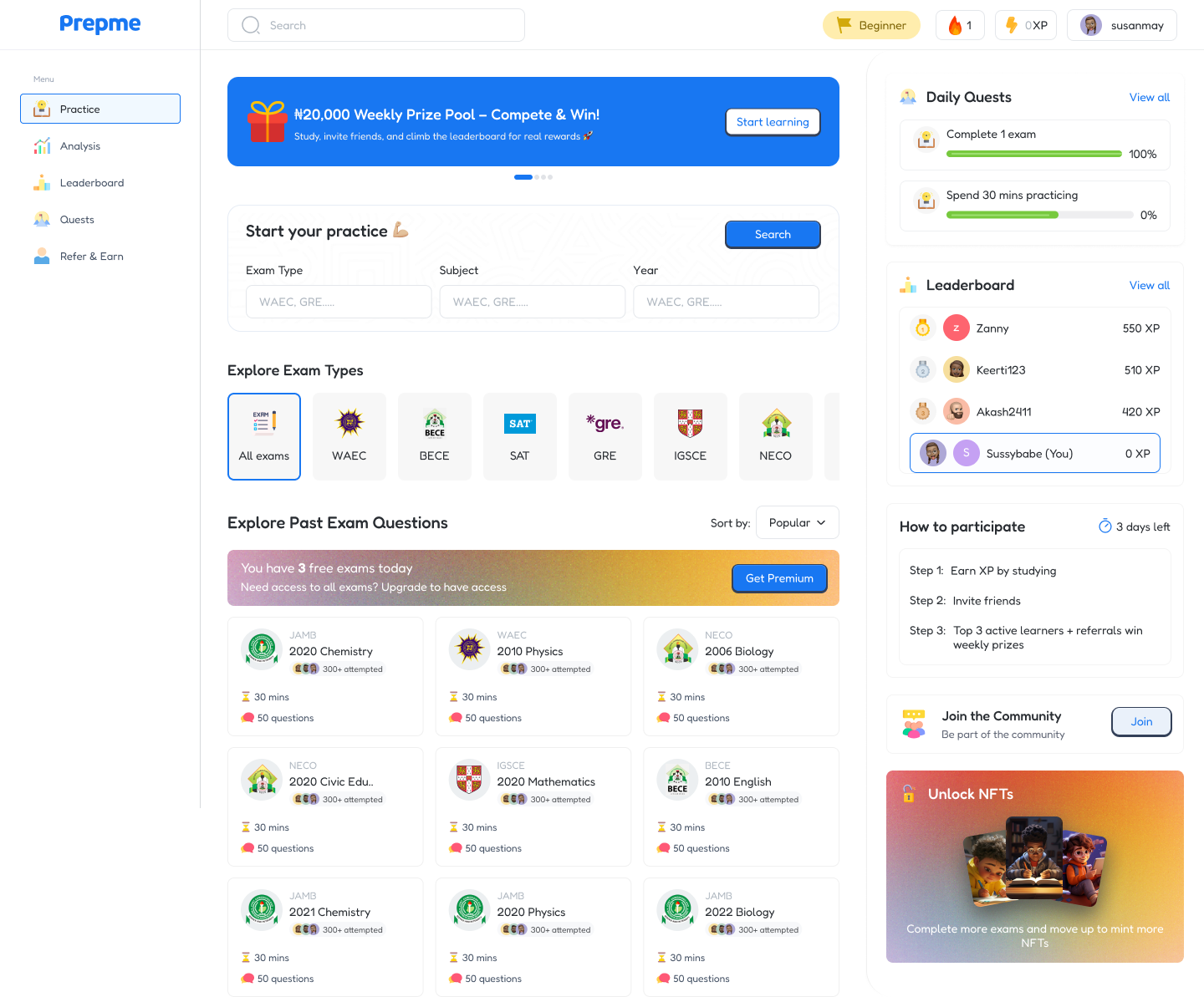
Prepme home: weekly prize pool banner, exam search, exam types, past papers, daily quests and leaderboard
The problem
Exam prep is solitary, repetitive and easy to put off, and most students lose momentum long before exam day.
The solution
Real past papers wrapped in a game loop: practise, earn XP, keep the streak, climb the board, redeem for airtime and data.
My role
Product designer and PM: product strategy, game mechanics, reward economy, flows and UI for web and mobile.
Timeline
4 weeks
78.5%of 2025 UTME candidates scored below 200 out of 400
62.96%of 2025 WASSCE candidates got five credits incl. English and Maths, down from 72.12%
3.6×more likely to finish a Duolingo course after a 7-day streak
Up to 50%telecom tariff increase approved in 2025, making data costlier for students
01

The problem

The questions were never the hard part. Showing up every day was.

Past papers are the most reliable way to prepare for WAEC and JAMB. Questions repeat, formats repeat, and timing matters. Students already know this. The problem is consistency: practising alone, with no feedback and nothing to show for it, makes it easy to skip a day, then a week.

The stakes are high. In 2025, 78.5% of UTME candidates scored below 200, and the share of WASSCE candidates with five credits including English and Maths fell from 72.12% to 62.96%. Meanwhile data got more expensive after telecom tariffs rose by up to 50%, so studying online itself had a cost.

What if practising a past paper paid for the data you used to practise it?

Consumer apps had already shown that streaks, quests and leaderboards build habits. Duolingo learners who reach a 7-day streak are 3.6 times more likely to finish their course. Prepme's bet was to borrow those mechanics and add a reward Nigerian students actually value: airtime and data.

02

The core loop

One loop, designed before any screen

Before designing screens, I mapped the loop every feature had to feed. If a feature didn't make students practise, earn, return or redeem, it didn't make the cut.

01 · Practise

Sit a real past paper

Timed, full-length exams by type, subject and year.

WAECJAMBNECOBECE
02 · Earn

Collect XP

Every finished exam, quest and referral pays out XP.

+30 XP exam+500 XP referral
03 · Return

Keep the streak, climb the board

Daily quests and streaks bring students back; the weekly leaderboard adds friends and stakes.

StreaksQuests₦20k weekly
04 · Redeem

Convert to airtime and data

XP becomes something real, which funds the next session.

AirtimeData

The XP economy

ActionXPWhy it's priced this way
Complete a past paper+30The core action. Earned on finishing, so rushing doesn't pay.
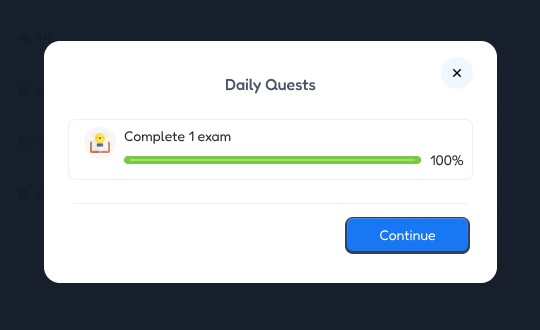
Daily questsVariesSmall, achievable goals ("Complete 1 exam", "Spend 30 mins practising") that make today count.
Invite a friend who completes an exam+500The biggest reward, but paid only when the friend actually practises.
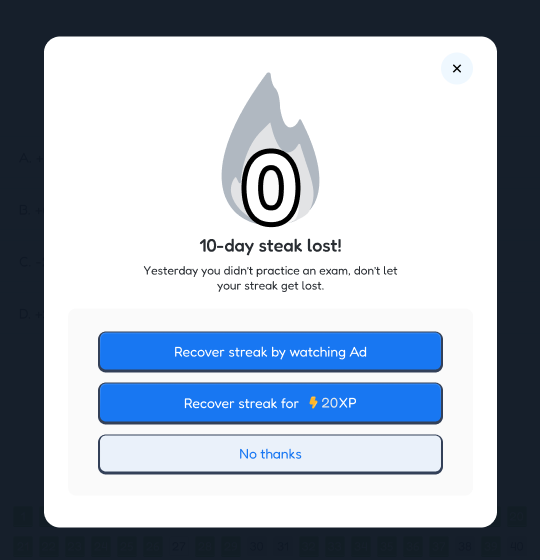
Recover a lost streak−20A cheap second chance, so one missed day doesn't end the habit. An ad is the free alternative.
Streak freeze (×2)−300Insurance bought in advance for days students know they'll miss.
Redeem for airtime or dataConvertedThe payoff that makes XP feel like money.
03

Mechanics

Eight mechanics, each with a job and a limit

Each mechanic is shown with why it works and the guardrail that stops it from getting in the way of learning.

01 · Commitment

Start with a promise, not a form

Mechanic
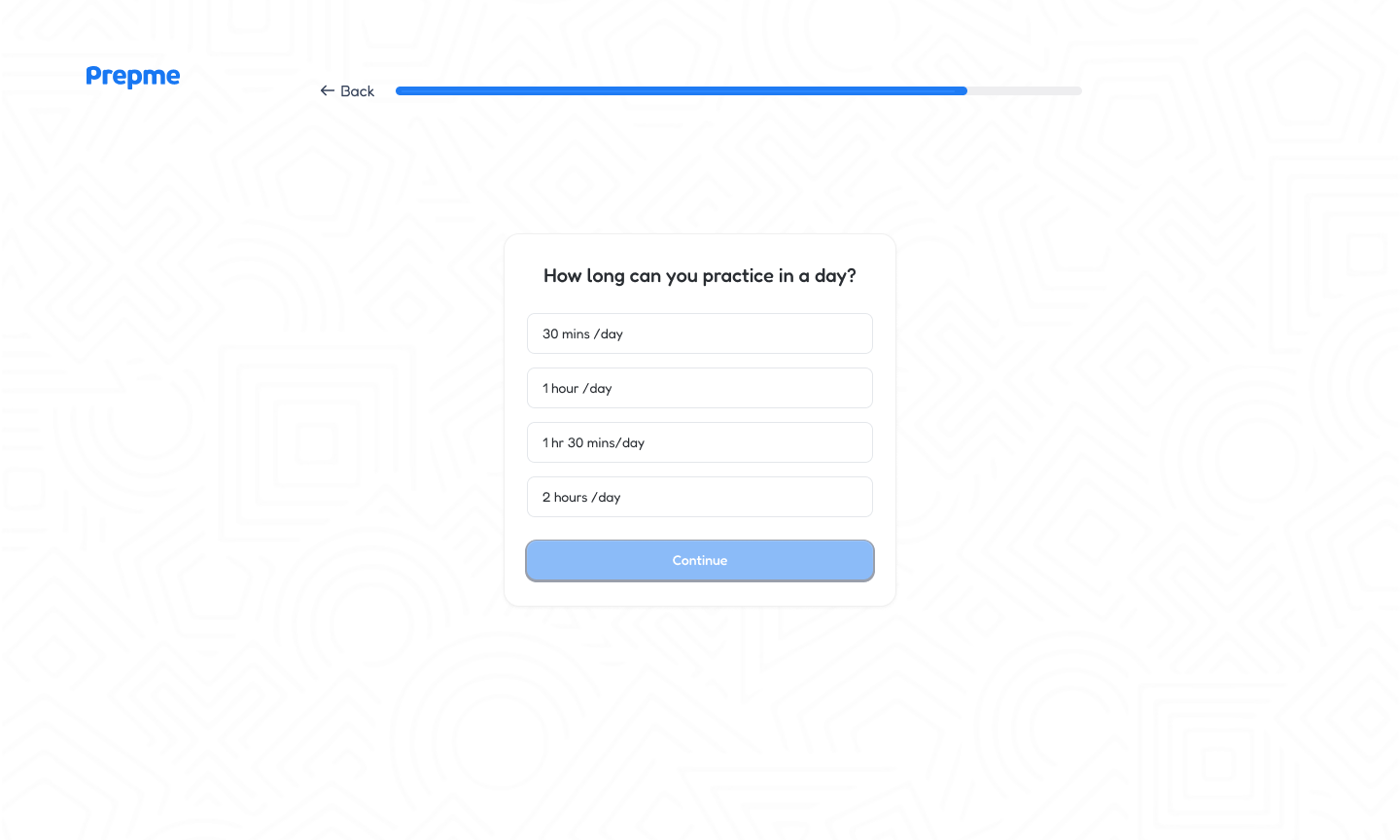
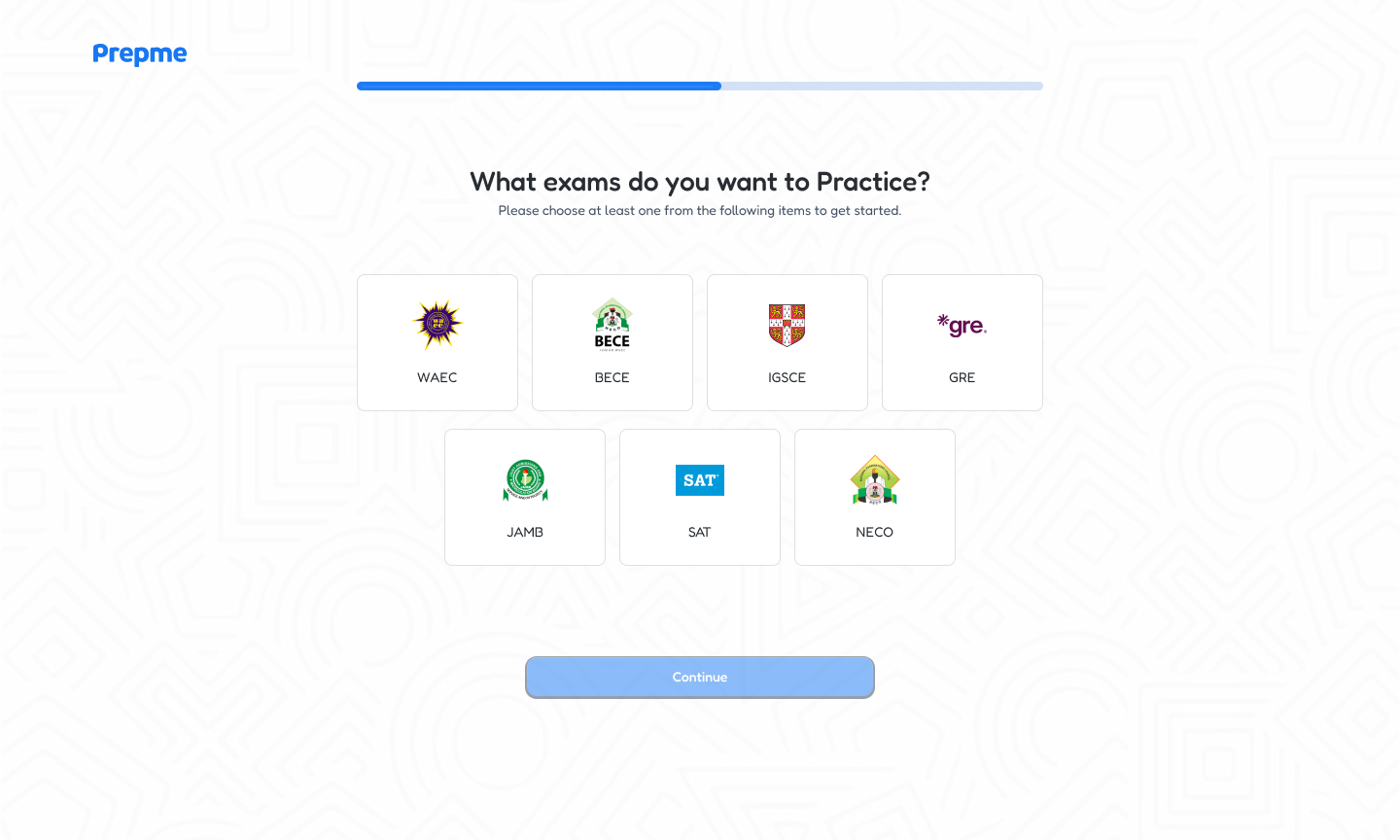
Onboarding asks two questions: which exams you're preparing for, and how long you can practise a day (30 minutes to 2 hours).
Why
A stated goal is easier to keep. It also personalises Home and sets the daily quest targets.
Guardrail
Small choices only. Students reach their first past paper in under a minute.
Choose the exams you want to practise How long can you practise in a day
02 · The ritual

Make starting an exam feel like an event

Mechanic
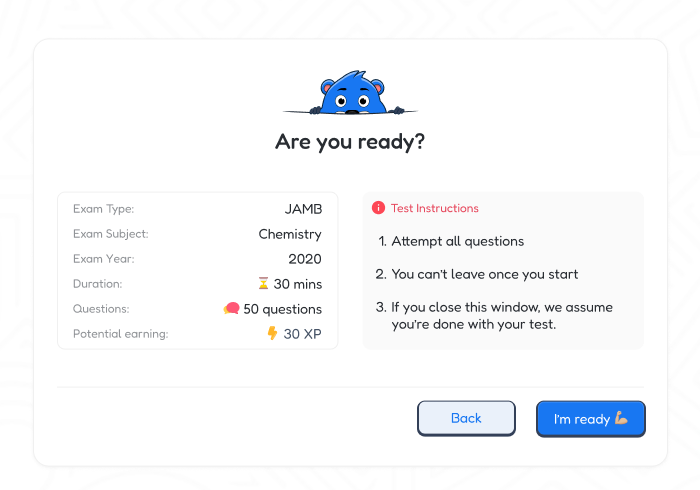
An "Are you ready?" card shows the exam, duration, question count and potential XP, followed by a full-screen 3-2-1 countdown.
Why
The countdown marks the switch from browsing to focusing, the way a game loads a level.
Guardrail
The rules are stated upfront: attempt every question, and you can't leave once you start, just like the real exam.
03 · The exam

Feels like the real exam, on purpose

Mechanic
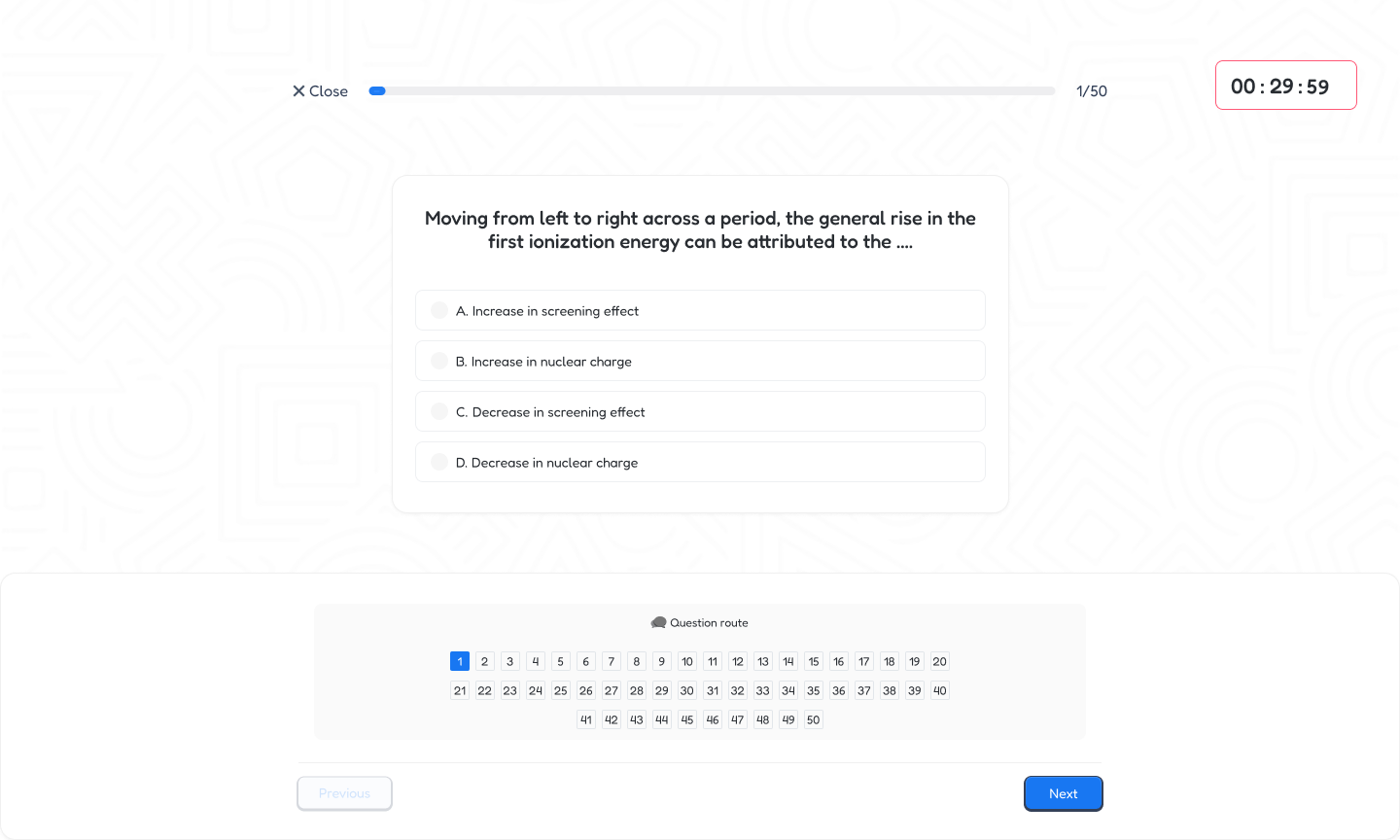
One question at a time, a visible countdown timer, a progress bar and a "question route" grid to jump between all 50 questions.
Why
Practising under real conditions is what transfers to exam day. The game stays out of the way while students answer.
Guardrail
No XP, sounds or streak prompts mid-exam. Submitting early warns how many questions are still unanswered.
Exam question with timer, progress and question route
04 · The reward moment

Celebrate the effort, explain the score

Mechanic
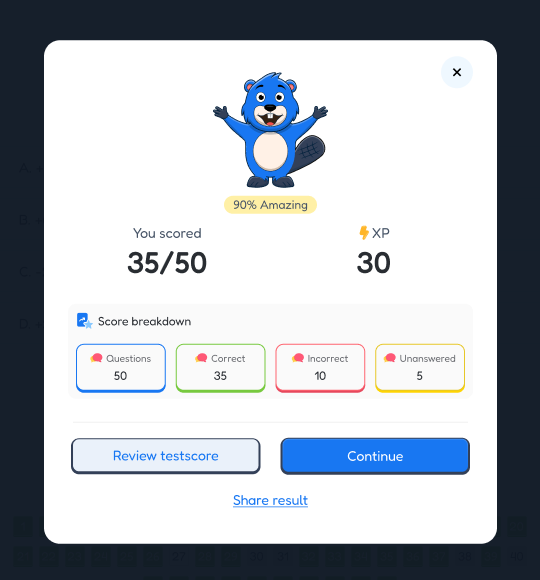
The mascot reacts to the score, XP earned appears next to the mark, and a breakdown shows correct, incorrect and unanswered questions.
Why
A reward right after effort is what makes a loop stick. The breakdown turns a grade into something to act on.
Guardrail
"Review test score" sits beside "Continue", so learning from mistakes is always the next step on offer.
05 · Streaks

A habit worth protecting, with a way back

Mechanic
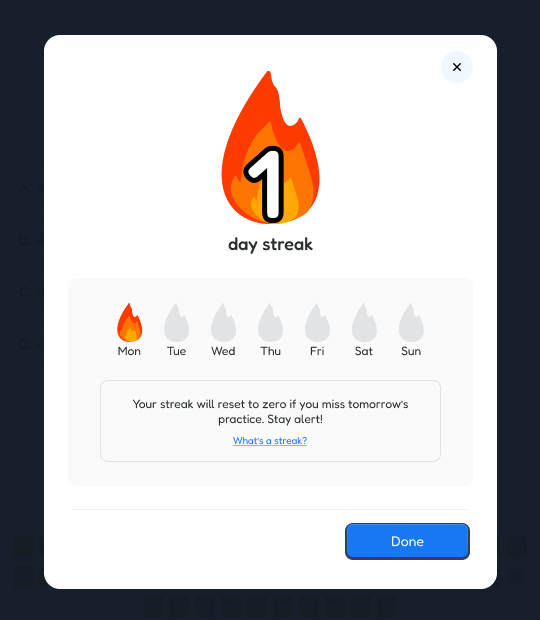
Each day you practise lights a flame on the week view. Miss a day and the streak drops to zero, unless you recover it by watching an ad or spending 20 XP.
Why
Loss aversion keeps people coming back. The recovery option stops one bad day from ending the habit for good.
Guardrail
Streak freezes can be bought in advance with XP, so planned breaks such as exam week or a family event aren't punished.
06 · Quests and leaderboard

Small goals daily, big stakes weekly

Mechanic
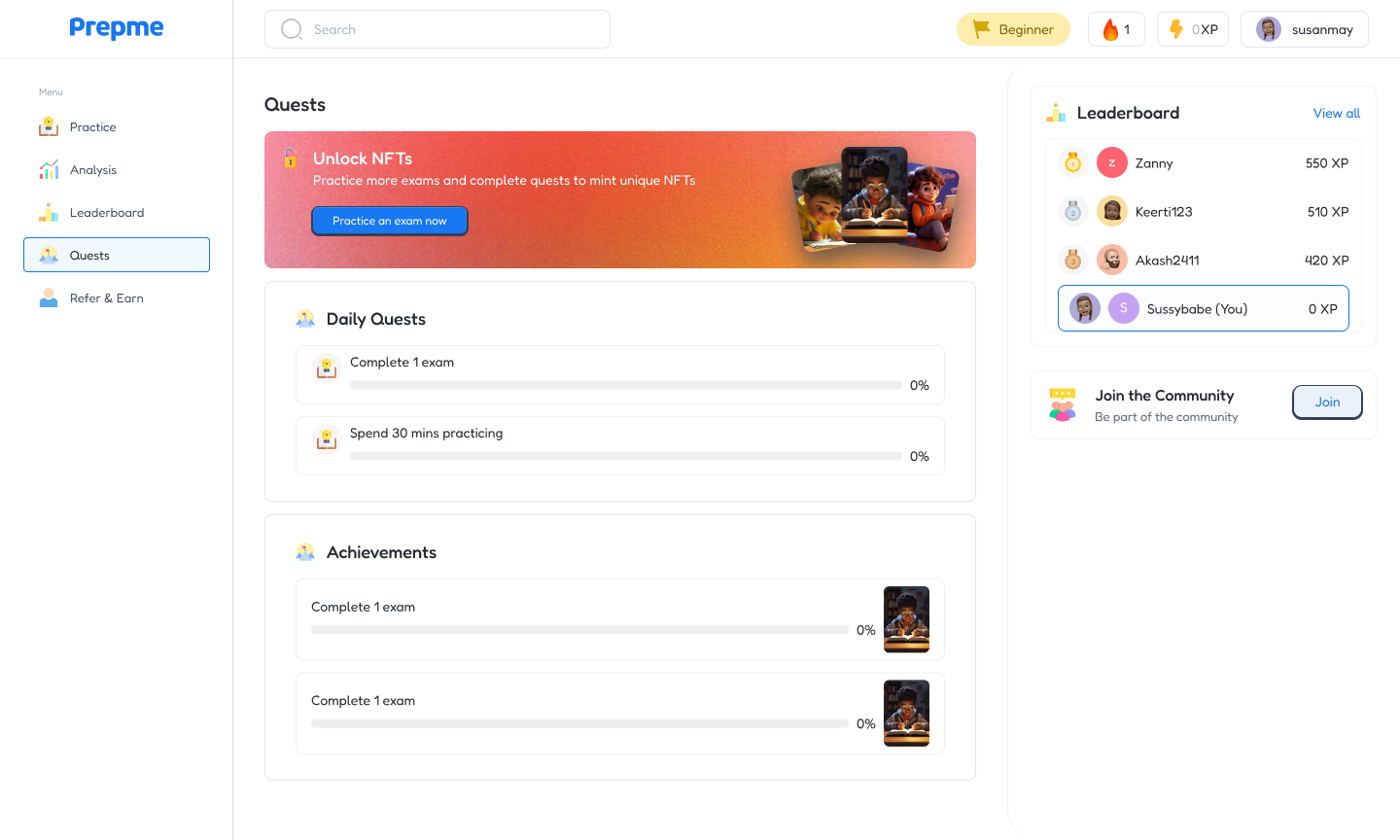
Daily quests and achievements sit on every page. A weekly leaderboard ranks learners by XP, with a ₦20,000 prize pool for the top three and a countdown to the reset.
Why
Quests give a reason to open the app today. The weekly reset means a new student can still win, so the board doesn't freeze into the same names.
Guardrail
"How to participate" spells out the rules in three steps, and you join the leaderboard only after completing your first exam.
Quests page with daily quests, achievements and leaderboard
07 · Friends

Study is more fun with your class in it

Mechanic
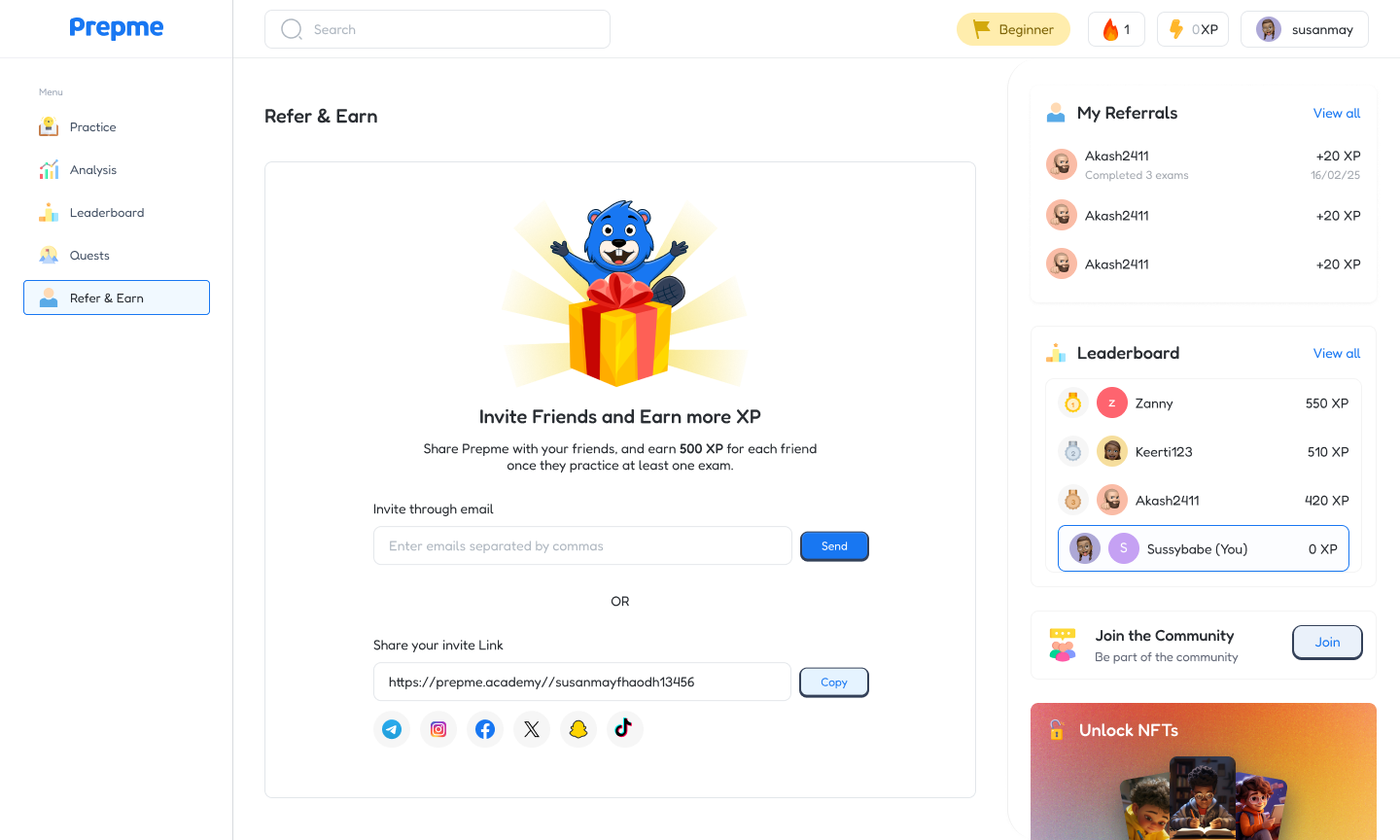
Refer & Earn gives every student an invite link and email invites, with one-tap sharing to WhatsApp, Telegram, Instagram, X and TikTok. Each friend who completes an exam earns the referrer 500 XP.
Why
Students prepare for the same exams at the same time, often in the same class. Friends on the leaderboard make the weekly race personal.
Guardrail
XP is paid only when the friend practises, and "My Referrals" shows exactly who has qualified.
Refer and earn page with invite link, social share and referral list
08 · Rewards

XP you can spend on the next study session

Mechanic
My Earnings shows total XP, conversion history and the option to convert XP into airtime or data.
Why
Data is what students spend to study online. Paying them in it closes the loop: practice funds more practice.
Guardrail
Every conversion is logged with Pending, Confirmed or Failed status, so students can see exactly where their XP went.
04

Guardrails

Making sure the game never beats the learning

Gamification can backfire: students farm points instead of learning. Three rules kept the incentives pointing the right way.

Reward finishing, not speed

XP is paid for completing an exam, not for fast answers or for opening the app. Rushing earns nothing extra.

Referrals pay only on practice

The 500 XP referral bonus is paid only when the invited friend completes an exam, which rules out empty sign-ups.

Free is generous, premium is deeper

Three free exams a day keep the loop open to everyone. Premium unlocks unlimited questions and detailed analysis, not more XP.

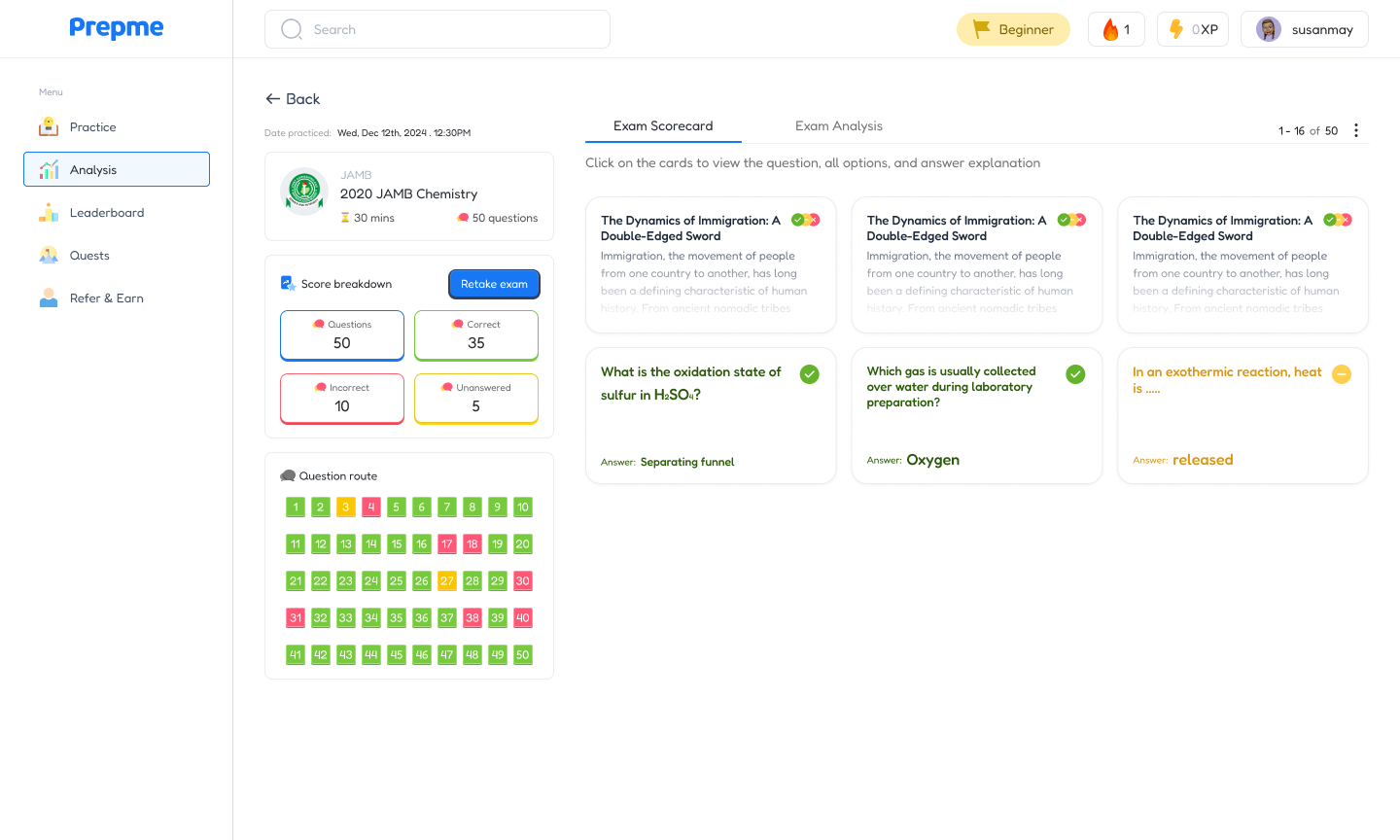
Exam scorecard with score breakdown, colour-coded question route and answer cards

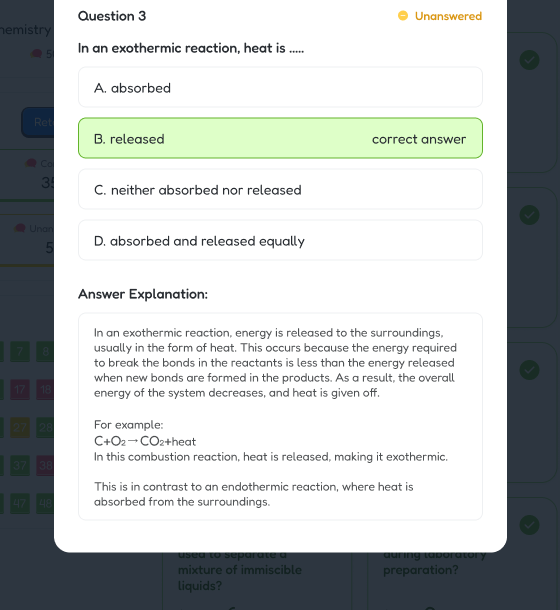
After every exam, the scorecard colour-codes each question as correct, incorrect or unanswered. Tapping one opens the right answer with a worked explanation, so the score always leads back to learning.

05

Look and feel

Calm for studying, loud for winning

The exam itself stays quiet: white, blue and plenty of space. Celebration happens in the moments between, on a dark overlay with the mascot, flames and gold XP, so a win feels different from a study session.

Colour

Blue for study and actions. Navy for reward moments. Orange flame for streaks, gold for XP, green for progress.

Mascot

Prepme mascot celebrating a score

A friendly blue mascot peeks over the "Are you ready?" card and celebrates scores, so the app feels like a study buddy rather than an examiner.

Streak icon

Flame streak icon and week view

The flame carries the day count and greys out when it's lost. It's the one icon students should never want to see go grey.

Mobile web menu
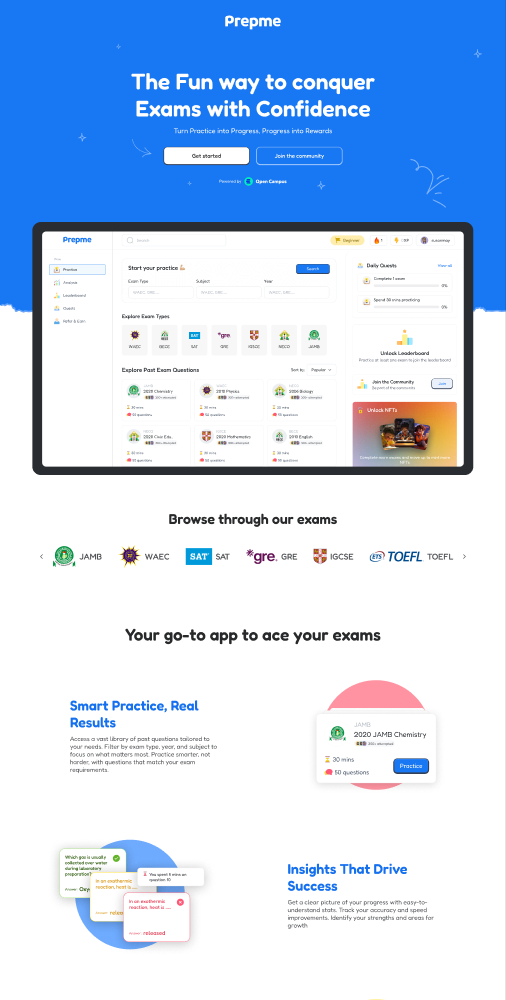
Prepme landing page: The fun way to conquer exams with confidence

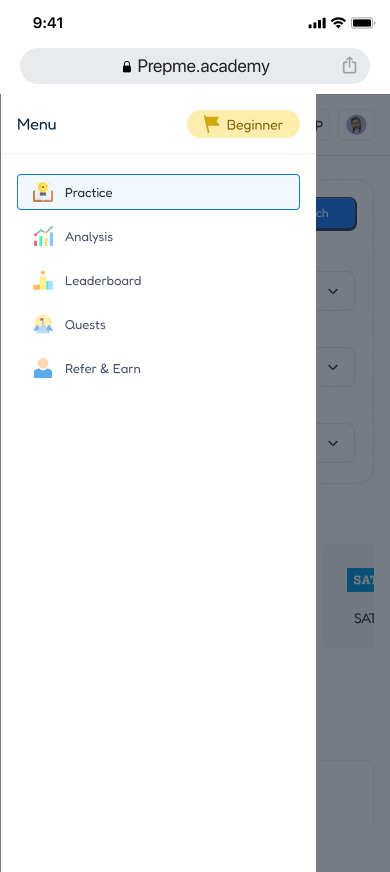
The web app is responsive down to phone width, and the landing page carries the same promise to parents and students: "The fun way to conquer exams with confidence".

06

Reflection

What I'd measure, and what comes next

5,000students in the first 3 months, from zero
2ndrunner-up at the Open Campus Hackathon

I worked as both product designer and product manager: setting the product strategy, prioritising features against engineering capacity, and designing the full learning experience.

The riskiest part of the design is the reward economy. If redemption is too generous, the business pays for farming. If it's too stingy, XP stops meaning anything. The first thing I'd track is how many exams students complete per redemption, and whether streak length goes up as rewards come within reach.

Sources

Next project

SailFish →